Excerpt
First pages of the volume, freely accessible.
Page 1
LES MAJOLIQUES ITALIENNES PRIMITIVES DE LA COLLECTION MORTIMER L. SCHIFF
par SEYMOUR DE RICCI
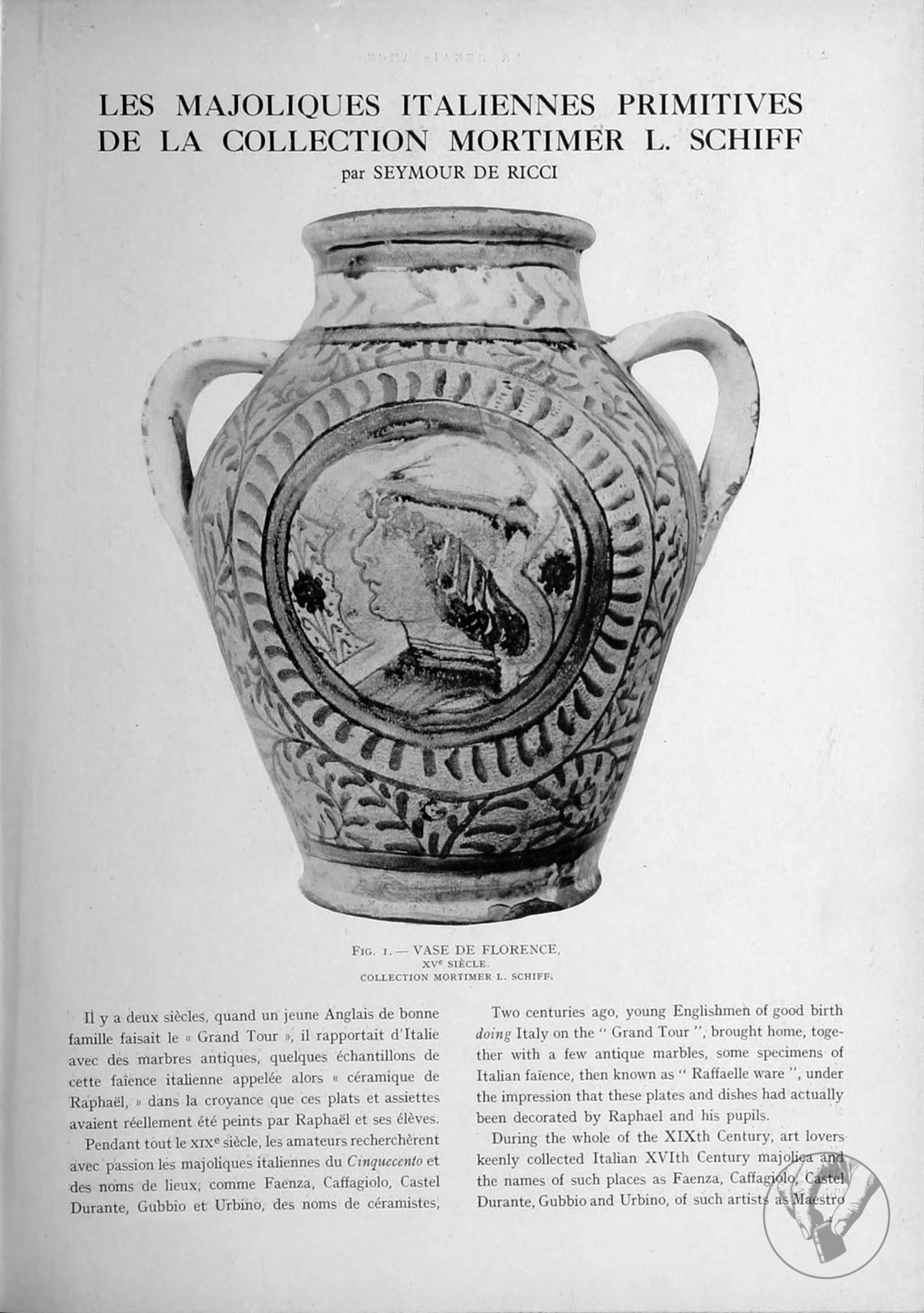
Fig. 1.—VASE DE FLORENCE, XVe SIÈCLE. COLLECTION MORTIMER L. SCHIFF.
Il y a deux siècles, quand un jeune Anglais de bonne famille faisait le « Grand Tour », il rapportait d’Italie avec des marbres antiques, quelques échantillons de cette faïence italienne appelée alors « céramique de Raphaël, » dans la croyance que ces plats et assiettes avaient réellement été peints par Raphaël et ses élèves.
Pendant tout le XIXe siècle, les amateurs recherchèrent avec passion les majoliques italiennes du Cinquecento et des noms de lieux; comme Faenza, Caffagiolo, Castel Durante, Gubbio et Urbino, des noms de céramistes,
Two centuries ago, young Englishmen of good birth doing Italy on the “Grand Tour”, brought home, together with a few antique marbles, some specimens of Italian faience, then known as “Raffaelle ware”, under the impression that these plates and dishes had actually been decorated by Raphael and his pupils.
During the whole of the XIXth Century, art lovers keenly collected Italian XVIth Century majolica and the names of such places as Faenza, Caffagiolo, Castel Durante, Gubbio and Urbino, of such artists as Maestro
Page 2
LA RENAISSANCE
FIG. 2. — VASE D’ORVIETO,
XVe SIÈCLE.
COLLECTION MORTIMER L. SCHIFF.
comme Maestro Giorgio, Fra Xanto et Fontana, se lisaient dans tous les catalogues.
Avec le début du XXe siècle et le goût croissant pour l’art archaïque, les savants et les collectionneurs se sont attachés à rechercher et à identifier les œuvres des siècles antérieurs.
Des pionniers, comme Argnani, Bode et Henry Wallis étudièrent les vases et les bols de Florence, Orvieto et Faenza et enrichirent de chapitres nouveaux l’histoire de la céramique italienne.
Giorgio, Fra Xanto and Fontana, became household words with the bric-à-brac hunter.
With the dawn of the XXth Century and the ever-increasing taste for archaism in art, the earlier specimens of the potter’s craft were gradually unearthed and identified.
Specialists like Argnani, Dr. W. von Bode and Henry Wallis, investigated the XVth Century jugs and bowls from Florence, Orvieto and Faenza and new chapters were added to the history of Italian ceramics.
Page 3
LA RENAISSANCE
FIG. 3.— VASE D'ORVIETO,
XVe SIÈCLE,
COLLECTION MORTIMER L. SCHIFF.
De ces majoliques primitives, on forma des collections importantes : celle de Beckerath, à Berlin, alimenta surtout, par sa dispersion, les musées et les cabinets allemands ; celles de Sigismond Bardac, Campe, Canessa et J. Pierpont Morgan, paraissent toutes s'être graduellement concentrées entre les mains de M. Mortimer L. Schiff, de New-York.
Plusieurs musées italiens, allemands, français et anglais possèdent de petites suites de ces majoliques. Nulle part, ni en Europe ni en Amerique, ni dans un
Several valuable collections of early majolica were brought together : the Beckerath collection in Berlin, since dispersed, but mainly among German museums and collections ; the Sigismond Bardac, Campe, Canessa and J. Pierpont Morgan collections, of which the choicest pieces seem all now to have been brought together in the wonderful series of over one hundred pieces of early Italian majolica in the house of Mr. Mortimer L. Schiff.
Several Italian, German, French and English museums
Page 4
LA RENAISSANCE
FIG. 4.— PLAT ROND, TOSCANE,
XVe SIÈCLE.
COLLECTION MORTIMER L. SCHIFF.
are the proud owners of
a few specimens of this
art. Nowhere, either in
Europe or America, either
in public or private
hands, does there exist
such a complete and well
selected representative
gathering as that belong-
ing to Mr. Schiff and
recently illustrated in a
catalogue which special-
ists have greeted with
much satisfaction.
Practically every school
of early Italian ceramics
is represented by the
most typical and hand-
somest examples obtain-
able. To write a full
history of XVth Century
musée, ni chez un parti-
culier, il n'existe une
série aussi complète et
aussi bien choisie que
celle de M. Schiff, telle
que l'a fait connaître un
catalogue récent, fort
bien accueilli par les
spécialistes.
Presque toutes les
écoles de la céramique
italienne primitive sont
représentées chez M.
Schiff par les spécimens
les plus beaux et les plus
typiques qu'il lui a été
donné de rencontrer.
Presque sans sortir de
son cabinet, on écrirait
l'histoire de la céramique
italienne au xve siècle.
FIG. 5.— PLAT AVEC L'EMBLÈME DES
VISCONTI, FLORENCE, XVe SIÈCLE.
COLLECTION MORTIMER L. SCHIFF.
Page 5
LA RENAISSANCE
Fig. 6. — PLAT ROND, TOSCANE,
FIN DU XVe SIÈCLE.
COLLECTION MORTIMER L. SCHIFF.
Italian majolica, it would be hardly necessary to go outside of Mr. Schiff’s gallery.
The twenty odd illustrations accompanying this paper will give the reader a very fair idea, both of the variety and the completeness of the collection.
The earliest piece reproduced is a lion-headed jug, from the Canessa collection, in the typical style of the early Orvieto ware, with a green and manganese decoration (fig. 2-3).
The beautiful Florentine two-handled jars of the XVth Century,
Les vingt et quelques illustrations de cet article donneront au lecteur quelque idée, à la fois de la variété et de l’ampleur de cette collection.
La pièce la plus archaïque que nous ayons reproduite est un vase à tête de lion, de la collection Canessa, dont le décor vert et manganèse est caractéristique des plus anciennes faïences d’Orvieto (fig. 2-3).
Les charmants pots florentins à deux anses, du xve siècle, à décor bleu-foncé sur fond blanc, sont représentés chez M. Schiff par quelques
Fig. 7. — PLAT ROND, TOSCANE,
FIN DU XVe SIÈCLE.
COLLECTION MORTIMER L. SCHIFF.
Page 6
LA RENAISSANCE
Fig. 8. — ALBARELLO, TOSCANE,
FIN DU XVe SIÈCLE.
COLLECTION MORTIMER L. SCHIFF.
Fig. 9. — ALBARELLO, TOSCANE,
FIN DU XVe SIÈCLE.
COLLECTION MORTIMER L. SCHIFF.
exemples de choix, autrefois chez Sigismond Bardac (fig. 1) ; c'est aussi de chez ce grand connaisseur que vient le grand bassin ou bacile florentin avec un cavalier à gauche, bien connu des historiens de l'art ; les deux seuls autres bassins analogues que l'on ait trouvés sont au Louvre et au Musée de Berlin (cf. pl. en couleurs). Un plat toscan, circulaire est décoré d'un lion héraldique, en vert avec contours au manganèse (fig. 4).
Plusieurs plats, probablement florentins, ont un usually decorated in dark blue on a white background, are represented in the Schiff collection by several striking specimens formerly belonging to Sigismond Bardac (fig. 1). The same great connaisseur was also the proud owner of the large Florentine basin or bacile with a horseman riding to left, well known to art historians as one of three similar pieces in existence, the two others being in the Louvre and at Berlin (see colored pl.). A circular Tuscan dish with a heraldic lion is remarkable for its manganese design, filled up with green (fig. 4).
Page 7
LA RENAISSANCE
Fig. 10. — VASE DE PHARMACIE, TOSCANE,
DÉBUT DU XVIe SIÈCLE.
COLLECTION MORTIMER L. SCHIFF.
marli orné de longues feuilles pointues, plantées diagonalement. Celui que nous reproduisons porte au centre la Biscia des Visconti-Sforza de Milan, un serpent dévorant un enfant (fig. 5).
Deux autres plats toscans de la fin du xve siècle présentent, au centre, des bustes élégants, de profil à gauche (fig. 6-7).
Deux grands et superbes plats portent les armes du roi de Hongrie, Mathias Corvin, et de sa femme Béatrice d’Aragon. Deux plats du Victoria and Albert Museum
Several dishes, probably Florentine, are decorated with an elaborate border of slanting pointed leaves. The example illustrated shows the celebrated emblem of the Visconti-Sforza family of Milan, the Biscia, a serpent devouring a child (fig. 5).
Two other late XVth Century Tuscan dishes have in the centre elegant busts in profile to the left (fig. 6-7).
Two large and magnificent dishes bear the arms of the Hungarian King, Mathias Corvinus and Beatrice of Aragon, his wife (fig. 11). The only other recorded
Page 8
LA RENAISSANCE
Fig. 11. — PLAT AUX ARMES DU ROI MATHIAS CORVIN.
COLLECTION MORTIMER L. SCHIFF.
pieces with these arms are two plates in the Victoria and Albert Museum.
Nearly as scarce are several beautiful albarelli or pharmacy-jars with male or female busts in profile, from the Sigismond Bardac Collection, also of Tuscan workmanship and dating from the end of the XVth Century (fig. 8-9).
Of the same period dates a handsome dish with Adam and Eve and the Medicis arms, formerly in the Bonnaffé and Bardac collections (fig. 12).
Slightly later is a remarkable pharmacy-jar
sont les seuls autres connus avec ces armoiries (fig. 11).
Presque aussi rares sont plusieurs charmants albarelli ou vases de pharmacie, avec des profils d'homme ou de femme, provenant de la collection Sigismond Bardac, également de fabrication toscane et de la fin du xve siècle (fig. 8-9).
De la même époque, date le beau plat d'Adam et Eve, aux armes des Médicis, jadis chez Bonnaffé, puis chez Bardac (fig. 12).
Un remarquable vase de pharmacie avec
Fig. 12. — PLAT AUX ARMES DES MÉDICIS.
COLLECTION MORTIMER L. SCHIFF.
Page 11
GRAND BASSIN DE FLORENCE
XV° SIÈCLE
COLLECTION MORTIMER L. SCHIFF