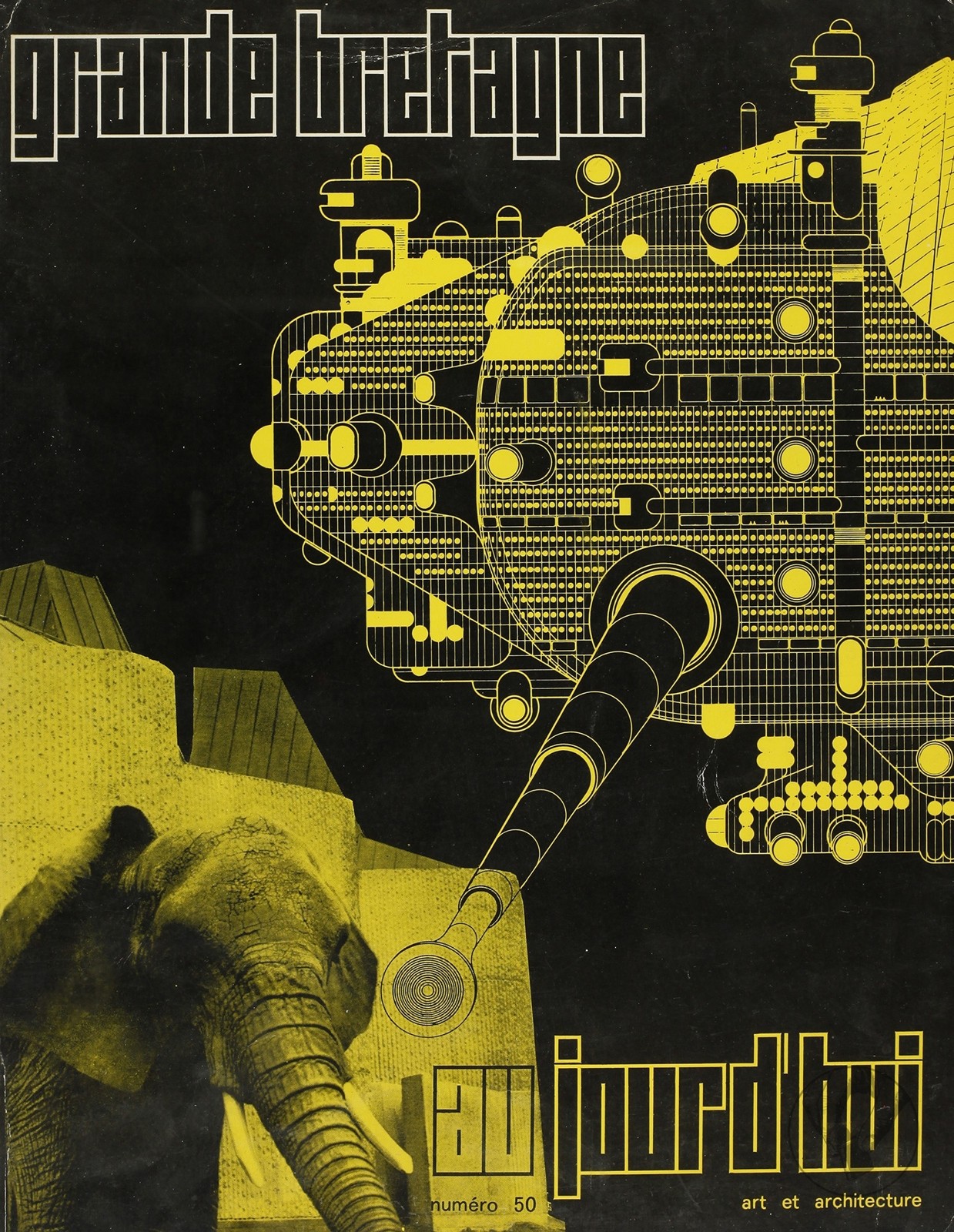
Excerpt
First pages of the volume, freely accessible.
Page 1
grande bretagne
art et architecture
numéro 50
---
Table of Contents
- Introduction
- Section 1: Overview
- Section 2: Key Figures
- Section 3: Historical Context
- Section 4: Current Trends
- Section 5: Future Outlook
- Conclusion
---
Introduction
The term "grande bretagne" translates to "great Brittany." This section provides an overview of the region's history and development.
---
Section 1: Overview
This section discusses the historical context of the region, highlighting key events and figures that shaped its development.
---
Section 2: Key Figures
Here are some notable individuals who have made significant contributions to the region:
- John Doe
- Jane Smith
- Michael Johnson
---
Section 3: Historical Context
The region has a rich history dating back to ancient times. It was known for its strategic location and cultural significance.
---
Section 4: Current Trends
Recent developments in technology and infrastructure have transformed the region, making it more accessible and efficient.
---
Section 5: Future Outlook
Looking ahead, the region is poised for continued growth and innovation.
---
Conclusion
In conclusion, "grande bretagne" remains a vibrant and dynamic place, offering endless possibilities for exploration and discovery.
---
Page 2
M. KNOEDLER & Cie
Saint-Honoré
PARIS 8 225-59-78
85 bis rue du faubourg
---
Octobre 1965 HAJDU sculptures
Novembre 1965 PEREIRE peintures
NEW YORK 22
14 East 57th Street
LONDRES S.W. 1
34 St James’s Street
---
THE NEW MORALITY
Revue trimestrielle internationale
Direction : Francine Virduzzo
SOMMAIRE DU NUMÉRO 13-14-15 - CONSACRÉ A LA CRÉATION
The New Morality, Creazione e creativita’.
René Massat, Pevsner et la conquête de l’espace.
Francine Virduzzo, Archivistes et révolutionnaires.
René Richetin, Manifeste anti-pop.
Raffaele Borsari, Processo creativo.
Silvio Ceccato, La creativita’ nella ricerca scientifica.
Carmelo Genovese, V Convegno internazionale di estetica.
Alice Ceresa, Della letteratura come dialettica.
Philippe Dereux, Expériences et réflexions.
Pierre Béarn, L’art d’être un jeune poète.
Norman Lewis Glass, Troubadors in t-shirts.
Enrique de Rivas, Tres miradas.
Antonio Saitta, O soli o ventu.
Thor Vilhjalmsson, Letter from iceland.
Ce numéro 20 F ou 4 $ U.S. La collection du n° 1 au n° 12 inclus: 100 F ou 20 $ U.S.
Abonnement (6 numéros): 50 F ou 10 $ U.S.
Les règlements peuvent être effectués au moyen de mandats-poste internationaux adressés à
THE NEW MORALITY, via della Penna 51, Rome.
ou par versements sur le C.C.P. « THE NEW MORALITY » 1/10777 Rome
Page 3
architecture française de recherche
CENTRE ART ET RECHERCHES
PAVILLON DE MARSAN
109 RUE DE RIVOLI PARIS
7 JUILLET 10 SEPTEMBRE 1965
---
SALINES ROYALES D'ARC ET SENANS (DOUBS)
EXPOSITION D'ARCHITECTURE
EXPLORATION DU FUTUR
LEDOUX
BOULLÉE
ARCHIGRAM
ARCHITECTURE PRINCIPE
MESA CITY
METABOLISME
Juin - septembre 1965
Page 4
Catherine Viviano Gallery
42 East 57 Street New York 22 N.Y.
EUROPÉENS ET AMÉRICAINS
CONTEMPORAINS
---
galleri latina.
ENGELBREKTSGATAN 12
STOCKHOLM
SUÈDE
ASON - DI BIANCO - EGNEL - FANGSTROM - MILLARES
MOLINER - PUCCIARELLI - RUIVO - SALGUEIRO
---
INTERNATIONAL ART FESTIVAL
HARLOW (LONDON)
9-24 JUILLET 1965
60 combine-paintings par
VERLON
ET L’EXPOSITION IMAGO-INTERNATIONAL
Renseignements: Harlow Art Festival, Town-Hall, Harlow (Essex)
---
Théâtre
Maison de la Culture
de Caen
Direction J. Trehard
Gilles Ehrmann
photographe
juin-septembre 1965
---
L’AQUILA-CASTELLO CINQUECENTESCO
Juillet-septembre 1965
ALTERNATIVE ATTUALI 2
Rassegna internazionale
di pittura scultura, grafica
OMMAGIO A MAGRITTE
OMMAGIO A MIRKO
OMMAGIO A BAJ
Organizzazione: E.P.T.
Ordinatore: Enrico Crispolti
Catalogo illustrato con ampia documentazione
et numerosi saggi critici: Editori Lerici, Via S. Tecla 5, Milan
---
GALERIE CAVALERO 103 rue d'Antibes Cannes Tél. 39-88-
Mai: 12 artistes brésiliens.
Juin: Paul Revel.
Août: Dumitresco.
Septembre: Millarès.
---
SOS DÉPANNAGE
PARIS SOS 99-99
LYON 52-23-40
CLERMONT-FERRAND 91-91-91
EAU - GAZ - CHAUFFAGE - ÉLECTRICITÉ
SERRURERIE - MENUISERIE - VITRERIE
ÉLECTRO-MÉNAGER - TÉLÉVISION
Page 5
AUJOURD'HUI N° 50
GREAT BRITAIN
English Summary
---
ARCHITECTURE
James Stirling.
(p. 12 et 16)
What buildings do you think have influenced you most in your attitude towards architecture, and what architects?
Different things at different time. Fifteen years ago it would have been Corb, Marseille, etc., but I think one grows out of being influenced by other people's work, also I find I am less interested in specific buildings. Today it might be the support structures at Cape Canaveral and Jodrell Bank.
Do you think about the town planning and general development of an area, and how what you build fits in with what is there or what is going to be alongside?
My greatest concern is to produce a building with a high degree of environmental quality (one-off or not) which somehow improves the human condition and I wouldn't let neighbouring buildings be inhibiting in trying to achieve this. Nevertheless, if there was an adjoining building which had something obviously one would be influenced by it. Unfortunately, universities have this habit of selecting a different architect for each job, ending up with a campus like and exhibition. I would prefer to have several adjoining buildings instead of odd ones dotted here and there.
In conceiving a new town I'm sure it's necessary to make a skeleton or structure from the elements of movement and gathering which is so intense that, whatever building is attached, it would always be secondary. I wouldn't mind attaching a building to a connector which I considered to be fundamentally relevant.
Lou Kahn has said that the idea of trying to do a skeleton for any group of buildings is hopeless, and that all any architect can do is to concentrate on his own building. All the environments you can think of are, in fact, groups of a whole lot of related buildings, but do you think that creating a skeleton would create difficulties for architects to come and work within it?
I think if the skeleton had great significance no architect would mind relating to it. Kahn is probably cynical about this, as actually the American situation is worse than the potential English situation. We do have this tradition of authoritarian (single man) planning and I think it's possible to achieve something, here, perhaps more easily than in America.
Page 6
You said that you think the kick has gone out of modern architecture. Do you think that we are going to continue to “free-wheel” for some time one the remainder of that impulse or can you foresee some new impetus arising?
I would like to think of myself as in the mainstream, perhaps “free-wheeling”, but I think architecture at the moment is rather static because I think architects are cynical about the society which they have got. It seems to me that in the twenties and thirties Corp. the constructivists, futurists, and others, had an immense vision of a society which was about to arrive and then it hit has come—we are all somewhat disillusioned. In the West we have the affluent society, and in the East communism. In neither case is this at all the Utopian way of life envisaged by the pioneers of the modern movement. I think the vision which they had gave them a consistent plastic inventiveness, something which is lacking now. A new culture will, in time, become apparent, quite unlike what we know now, maybe an entirely inferior one. It won’t be anything to do with Bloomsbury Square or plazas of prazzles or anything like that.
Could you say something about the sort of investigation you do into the functions of the building and structure?
Structure is something which holds a building up and stops it falling down. An architecture over-concerned with structure or services expression is really superficial. We have a normal responsible attitude to research; we analyse the “brief”; we do user research; we visit similar buildings and we do general academic research. We examine the site and see what inevitable inhibiting factors there are. Then, after programming the hierarchies, we set about putting together a relevant organization.
For this I have a staff (nowadays called a team) gathering together material, analysing programming, drawing up and detailing; one is assisted all on time by others who are involved in all the factors and are also working on design options. However, an actual decision as to what is correct or not in a design has to be my responsibility. Even so, we don’t find many design possibilities come up, as we tend to fasten on to appropriate functional solutions and then try to fit other relevant factors, and so on gradually building up. I think every building must have at least two ideas in it.
With respect your initial failures—five out of six—you feel that this can be got over by general public seeing more of stimulating architecture!
It could easily be got over by sacking planning officers and not having aesthetic control. Now the argument is that if we didn’t have it much worse things would get built. But I don’t think this is so. All over the country no sees hideous developments which don’t appear to have been subjected to any aesthetic test. If there isn’t a consistent cultural level you are really operating in terms of a gamble and it depends whom your scheme goes in front of as to whether it gets turned down or not. In this situation it would be better not to have control.
Cedric Price. (p. 43)
It is not the role of the architect to crystallize the short-comings, caused through indecision or doubt, of other disciplines.
At a time of rapid increase in the rate of fundamental questioning of socially oriented disciplines, whether economic, legal or scientific, the responsibility of the architect and planner is not to superimpose a fake architectural discipline in the guise of order.
New Universities in England, without exception, are medieval piles with power points.
Lack of certainty on the continuance of institutions or activities can clarify the architect’s task if he includes the time factor as a positive determinant of his aesthetic.
The controlled structural life of an air-house contrasts with the infinite life intended for the Great Pyramid.
In addition to an architectural awareness of calculable life, constructive exploitation of mobility of ideas, power, people and goods is required.
Rapid transit systems do not require evenness of parallel development. An evenly serviced country enables calculated imbalance in individual development. The concept of a balanced community no longer has physically finite significance. The words town and city are redundant.
The socio-environmental significance, thought necessary permanence, of past buildings and towns is now questioned by all except the majority of architects.
The architectural exercise is not to make present conditions more bearable —rather it is to improve the condition of life beyond the level previously thought possible.
The man-made cross surrounding us is an example of what to avoid and not the basic fuel of an imitative art form.
The over-hot imagery of present day English Architecture puts a brave face on an empty head.
Plug-in City
General design.
Peter Cook (p. 50-51)
The formation of the Plug-in-City is set up by applying a large-scale network structure that contains access-citys and essential services to any type of terrain, whether already built up or not. Into this network are placed units that cater for all the needs of the city. These units are planned for obsolescence (as is the structure). The units are serviced and replaced by means of a crane-railway which is placed at the top of the network. The interior of the network contains many parts which are providing for increased leisure activities (in accordance with the social trend); it also contains many elements which will replace the present-day work operations. These elements largely consist of electronic and machine installations.
The transport and sustenance elements, monorails, roads, the system of feeder-tubes for goods and services, etc., are also expendable. The whole city is expendable.
The whole city is also one building (in as much as it is a building). Initially it will run tangentially to the existing main cities, but eventually it will replace them. After about 40 years the structure itself will be technologically outdated and will (by means of the craneways, or whatever replaces them), have replaced itself.
In these ways the Plug-in-City is very like a living organism, breathing and reproducing itself.
Table of relative permanence.
Bathroom or kitchen, living room floor
---
replaced in
---
3 years
---
Living-room
---
5 years
---
Bedroom unit
---
8 years
---
Location of housing unit
---
15 years
---
Immediate-use sales space in shop
---
6 months
---
Local shop
---
3 years
---
Additive shop location (larger shop)
---
6 years
---
Work unit (Offices)
---
4 years
---
Computer unit (offices, etc.)
---
2 years
---
Car silos and roads
---
20 years
---
Main structure
---
40 years
---
The craneway is established at intervals above the top of the main framework. There are occasional smaller craneways at lower levels within, using telescopic cranes. All placing and removal of all types of unit is via the craneway.
The aerial view (p. 49) is of a small section of Plug-in City and shows how it is basically a straight line with neighbourhood spurs going off on their own hook. The grid system which all the various units are plugged into is generally fairly high, but at some points, such as the ends of the spurs, it could be only one section of 144 feet high. The bowers on the right are stop-over apartments for the most mobile of the population. These would give a concrete and efficient service with direct links with the international physical and telecommunication routes. To the right of the apartments is the fast memorial and the hoverway. The craneways are shown as heavy double lines over the tops of the structure and at the bottom left of the drawing you can see a part of the city under construction, also at the top of the structure at parts can be seen the environment seal ballons which could be inflated to enclose areas for special occasions or in bad weather.
The Maximum Pressure Area is controlled in plan by a few routes. These are cleavages in the main structure which all for a complete drop for the cranes, top-to-bottom. The craneways are multiplied along these routes. The main feeder roads and main feeder service-ways are located in the first 300 feet either side of the routes. These pedestrian ways take the form of travaliers (used for spanning from key level to key level, and over a considerable distance from the road and escalators (used for spanning adjoining levers) and the usual floor formations.
The Maximum Pressure section demonstrates several of the features basic to the entire Plug-in-City.
The diagonal framework is made up to 9 ft diameter tubes, which intersect at 144 ft intervals with an eightway joint. One in four of these tubes contains a high speed lift. One in four contains a slower, local lift. One in four contains an escape tube, and the remaining tubes are for services and goods.
Floor levels are created as required within the framework, generally by supporting a subsidiary structure of tension wires and “rafts”, or alternatively attaching the rafts to the main diagonal structure. The entire collection of subsidiary elements, housing, shops, offices, roads, travelators, etc., is supported on the main diagonal structure.
There is a hierarchy through the structure based on relative permanence and relative weight, and relative speed of operation. The longest-lasting elements are placed near the base or the interior of the organisation. The elongating elements tend to be near to the top or the periphery of the organisation.
Hence the heavy railway and the goods handling are at the base, and the environmental seal ballons are at the top. The heavy elements are at the base. Faster roads and fast monorails are near the top, local car parking is near the base.
The lower middle region, reading up the section, tends to contain the busy areas of walkabout space. It is here that the plaza is located, it is here also that the main lifts disappear.
Expendability.
Archigram 3 (p. 52)
more and more
Almost without realising it, we have absorbed into our lives the first generation of homes... foodbags, paper tissues, polythene wrappers, ballpens, E.P.S.... so many things about which we don’t have to think. We throw away almost as soon as we acquire them.
Also with us are the items that are bigger and last longer, but are nevertheless planned for obsolescence: the motor car... and its unit-built garage.
Now the second generation is upon—paper furniture is a reality in the States, paper sheets are a reality in British hospital beds, the London County Council is putting up limited-life-span houses.
Through and through.
Every level of society and with every level of commodity, the unchanging scene is being replaced by the increase in change of our user-habits—and thereby, eventually, our user-habitats.
We are becoming much more used to the idea of changing a piece of clothing year-by-year, rather than expect to hang on to it for several years. Similarly, the idea of keeping a piece of furniture long enough to be able to hand it on to our children is becoming increasingly ridiculous.
In this situation, we should not be surprised if such articles wear out within their “welcome-life” span, rather than their traditional life-span.
The attitude of mind that accepts such a situation is creeping into our society at about the rate that expendable goods become available. We must recognise this as a healthy and altogether positive sign. It is the product of a sophisticated consumer society, rather than a stagnant (and in the end, declining) society).
Our collective mental blockage occurs between the land of the small-scale consumer-products, and the objects which make up our environment. Perhaps it will not be until such things as housing, amenity-place and workplace become recognised as consumer products that can be “bought off the peg” with all that this implies in terms of expendability (foremost): industrialisation, up-to-date-mess, semiconductor choice and back of product-design—that we can begin to make environment that is really part of a developing human culture.
Why is there an indefinable resistance to planned obsolescence for a kitchen, which in twelve years will be highly inefficient (by the standards of the day) and in twenty years will be intolerable, yet there are no qualms about four years obsolescence for cars.
The idea of an expendable environment is still somehow regarded as akin to anarchy. As if, in order to make it work, we would bulldoze Westminster Abbey.
We shall not bulldoze Westminster Abbey.
Added to this, the idea of a non-permanent building has overtones of economy, austerity, economy. Architects are the first to believe the great potential of expendability as the built reflection of the second half of the twentieth century. Most of the buildings that exist that are technically expendable have the fact skilfully hidden... They masquerade as permanent buildings—monuments to the past.
Page 7
ART
The guerrilla vanguard of british contemporary art.
G.S. Whittet (p. 59).
Britain is hindered by insularity, but instead of forming an organised vanguard, her artists act like secret agents. The all-powerful leader Henry Moore, whose massive forms, close to the natural outline of rocks and landscapes, create resemblance in their raw contours. More than ever, the imparts monumental scale to his work, implying authority. His feminine counterpart, Barbara Hepworth, seeks through the softening abrasion of irregularities to present streaked artifact of pure form. Complimentary symbols, conflict, attraction, repulsion, tenderness, depict the tension of human mating. Following these leaders come Lynn Chadwick, whose exhibition of architectonic concepts in wrought iron dictates new associations for open-air sculpture, and Kenneth Armitage, on the threshold of a phase of monumental monolithic sculpture. Imagery with metal is used by many in your sculptors—Geoffrey Clarke for Coventry Cathedral cross, Bryan Kneale working steel, Elisabeth Frink uses copper, David Partridge hammers nails into changing textures and tones. Painting, whose production is subject to thematic cycles of treatment, follows a more sporadic evolution. The universal talent of Francis Bacon crosses almost a shudder of disgust. His male figures, marked of all clothing are almost bare of their skin, exposing the hollow flesh. Although this painting has the elementary force of life, the homosexual background is penetrating. In his hands, colour has to be hurtled on to canvas in the heat of frenzy. Keith Vaughan, one-time disciple of Matisse, groups figures and landscapes. The vivid colours of the background bring it forward, thus projecting the foreground even nearer the spectator. Victor Pasmore also felt the necessity of drawing his art from the flatness of the parallel plan of the eye often with dark curved contours turning in opposite directions on a white ground. Non objective painting has been of little interest in Great Britain, although surface decoration in a provocative arrangement has recently returned with young painters whose canvases are alive with dazzling parallel stripes, curves and angles. Landscapes and figures remain the basis of British art, while a solitary master of still-life survives—Ben Nicholson. Plasticism and constructiveness represent a minority—the spirit of oil painting is romantic (Graham Sutherland, Ivan Hitchens and L.S. Lowry). Pop art, produced by the lightheartedness of Royal College of Arts graduates reveals a lessening of the irreverence of youth. One of its creators, David Hockney, found a new delicateness in handling his palette during his stay in America. William Gell has reached full maturity in the vibrating spheres of his symbol. British art, in spite of fleeting moments of success among very young painters, attains its greatest force amongst men undergoing style changes before middle age.
The situation of the arts in Great Britain to-day.
J.P. Hodin (p. 60).
The end of Pop art.
Public opinion, unfavourable to American over-domination of English painting, has calmed down now that Pop art, that exploitation of common taste, nurtured by the superficial attraction of publicity design, is out. Erroneously compared to Dada, Pop art was pleasing, bought, loved, although its last triumph at Venice Biennale is no proof of artistic merit, but rather an indication that prize-giving is dangerous to arts. Political and economic influences must be eliminated to succeed in recovering Venice. The Kassel Documents build upon choice and quality and is the greatest success to date for English sculpture and painting.
Painting versus sculpture.
Modern British sculpture achieved a leading position after the second world war through the impact of Henry Moore, Barbara Hepworth and others. Few painters were able to equal this—Ben Nicholson, Francis Bacon and perhaps Victor Pasmore with his mastery of technique and taste based on the Neo-Plastic and Purist creed. Ivon Hitchens whose lyricists recorded Bauhaus, is the expression of beauty and harmony. English art critics and painters must shed their dependance upon American examples and understand that art needs the ideas and inspiration of the “Ecole de Paris”, nerve centre of artistic and intellectual life. After the Impressionnists, the Fauvists, Cubism and Free Expression, cultural tradition and avant-garde spirit are as strong as ever in Paris, concentrated in the personality of André Malraux.
Sexualism and abstraction.
After Expressionist chaos and abstract boredom, the artist, in search of subject matter, finds sexualism. Strongly represented in Pop, it is pornography in art, pleasing a generation which believes in the leadership of the scientific mind rather than in fate or mysticism. Only the attitude of those who create and defend more stable achievements can rectify the situation.
Icaru of Cornwall - Peter Lanyon.
This artist, a former pupil of Ben Nicholson, did no share the weaknesses of his contemporaries. He was the poet of Cornwall in paint, deeply attached to its landscape and traditions, which he explored even under water and from a glider. Although no realist, he painted the reality and character of his surroundings. Form, atmosphere, mood, and clarity were mingled together in the most outstanding of this period of English painting.
The youth of british art.
S. Frigerio (p. 61).
For years, Venice was the meeting place for insular and continental art, each Biennale witnessing an increase in the interest shown to British sculpture entries, while remaining less favourable to painters. Ben Nicholson had a moderate success, whereas Francis Bacon was immediately hailed in France and Italy as the long-awaited master. His erotic obsessioned themes caught art at a turning point and revigorated the British contribution to the 3rd Paris Biennale. The English invented Pop art, but to limit the danger critics hurriedly recorded that it was only a fashion. However it seems to have solid backing, since its creators graduate from royal academies and are frequently hung in well-known galleries. There is even sophistication there where we expect to find simplicity. Some artists go against the new figuration and undertake formal, graphic and tachiste research which emerges as abstraction, previously cast aside. What of the future? The young generation of British painting is reassured—a picture by Hockney has been hung in the Tate gallery. Perhaps art will be able to find its place in the familiarity of life, London has already awakened public interest which Paris is still striving to capture.
English artists at school.
J.-A. França (p. 61).
Young British artists, pop or not pop, go to school. They never hesitate to publish their university degrees and diplomas on exhibition catalogues, thus linking sacred tradition with their esthetic revolt. Between 1959 and 1962 a dozen young painters at the third Paris Biennale were graduates from the best-known British art schools (Royal College of Art, Slade School of Fine Arts, etc.). St Martins School is preparing the new generations of sculptors judging from their 1965 exhibition. In 1964, all English entries to the Stuyvesant Foundation Exhibition had school training. Not only do artists attend courses but they also return later as professors, for example Anthony Cao and Joe Tilson at St. Martins, Peter Blake at the Royal College of Art, Harold Cohen at Slade. There is no doubt that teaching is the most positive destiny for a British artist. Therefore fine arts schools are dynamic and reveal new trends. The Royal College of Art proclaims that its aim is to give students a chance to work “in their own way”... I almost forgot to add that Francis Bacon never went to school.
Page 8
Middle aged.
We are all anachromic. How can it be otherwise? There is always something which precedes that which follows, even supposing we know which is in front and which is behind. A given period is not a definite picture but a puzzle which the history of art together sometimes one way, sometimes another. We cannot have a definite judgment since this cannot exist. It certainly that, new way of daisim has unfurled in Britain, along with a renewal of geometric painting. However other invisible trends exist, perhaps too feeble to break through the ranks. Therefore to avoid any parts we have chosen to review middle-aged painters. Abstract painting disregarded only two years ago, has come down far more uncompromising than ever, proving that geometry is neither dead nor outdated, just taking its time. It is a safe guess to say that lyrical and psychic abstraction is sick only in the minds of artists who are not very good at abstracting. Psychic collectors and museum directors, but to persevere alone, abandoned by artistic opinion, needs courage which, however, develops personally. The painters we have chosen have no common denominator—William Scott, with his moderated simplicity and elegance in expression and composition; while Alan Davie is all expression and sensuous gesture. As for Tony Stubbing, he is the strangest artist to be met, William Scott, born in 1913, half Scotch, half Irish, declared so years ago that he wished to combine erotic sensualism with instinctive self-experienced severity. His paintings are linked to the growing empiricality. Gauguin and Bonnard influenced from this world of formalist growth and sculpture. John Smith, such as Lush—full of exuberant frenzy. He is above all vivaciousness, whole-hearted invention, linked explosions upheld by violent contravicted colours. With Tony Stubbing, we enter another world, the more make-believe. His singularity owes nothing to his spells in Spain, Paris or New York, it is specifically English. He was marked by the discovery of mural painting of bons and later by full fighting, but retained only the image of raised hands and hooves. By working with bare hands, thus approaching mural painting techniques, he discovered rhythms and extraordinary possibilities—in-stantiation blessing, identification with drams of celestial and mechanical aesthetics. It is more astonishing that the project is modified them, to give them a new dimension which is most often of nonconiliatory, underlining Stubbing’s belief in the Celtic gift of integration into the universe. Although Nicolas Georgiadis is not English by birth, he has lived in London for over ten years and has shown his talents for decoration at the Covent Garden Opera. His painting has an impressive structure with alternating ochres and greens, robust like Brage, which underline balance for the eye. His work is devoid of complexes, it has the rare quality of being positive.
J. Alvard (p. 62-53).
---
Francis Bacon.
Three of Francis Bacon’s studies were slipped into a London exhibition in 1945, presenting images so awful that the mind snipped shut at the sight of them, half-human, half-animal figures confined in space difficult to decipher. They were dated 1944, therefore the liberation of concentration camps held enlarged our ideas of human enormity, but in truth they were painted in 1936 and 1939. Bacon discourages the attribution of meaning to his pictures but after 20 years these studies are a prophecy, an evacuation of people hurrying in hunger to the scene of human disaster. Bacon’s achievement has been kept one lump of history yet during his retrospective exhibition at the Tate Gallery in 1952, the timeless appearance of painting initially considered the quench of to-day was impressive—the paint structure remained, eloquent, varied, august. The methodology of image preoccupies Bacon. He dreads the idea that the “story should talk louder than the paint”, considers himself a maker of images which are saved by their ambiguity. Something of gambitability of the chase enters into his work, yet he manages to be hunter and hunted, remaining intact in both capacities. His work is based on the knowledge that all situations are extreme, the refusal to accept them as such is betrayal of life.
J. Russell (p. 64 & 67)
---
The younger generation in Great Britain.
There is no unifying tendency for British style. Trends are numerous and complex, and no particular movement is representative of general activity since interesting work has been produced in many fields: construction, assemblage, figuration, coloured sculpture, etc. In the international context, British art seems from the U.S.A. The philosophy of art activity in England is not that the environment of art can be realised in any form, with any subject matter, and in any media. Provincialism, a half-mark for so long, with its romanticism and recourse to nature, has been replaced by the influence of urban ambience. The fields of painting and sculpture are merging, techniques are no longer the reason to separate one art another, therefore it is more logical to group artists according to their ideas rather than memory, without defining their activities in terms of forms. Formalisms under this heading come the symmetrical and classical paintings of Robyn Denny. Tess Jaray uses perspective as the dynamic element within her work, Jeremy Moon is more preoccupied with the use of geometric form and chromatic colour as pattern elements. Marc Vaux now bases his paintings on a grid art which is subsequently incorporated into an expubert loose-form graphic structure—such as the paintings of John van der Merwe and Paul Huxley. The notion of minimal means is a central issue, with one or two forms, flat and without texture, in intense relationship with the expansive background. Op art—Disciplines of this retinal idiom produce dramatical optical illusions. Bridge Riley, Peter Sedgley and Jeffrey Steele work in this field. Processed Images—Smitland may turn out three-dimensional painting using this notion of projection, normally employed in advertising techniques. An abstract form on close examination can be eventually identified as an outline representation of a commonplace object, out of proportion with the background. Derek Boshier projects no identifiable object but manipulates perspective which extends beyond the confines of the rectangle. Alarcon and Bertrand Cohen. The most important components of the idioms are Harold and Bernard Cohen. The graphical element of Harold Cohen work rests in his punctuation of liquid areas of colour with consistent linear themes. Bernard Cohen has basic his recent gestural images on complex series of arabescences and continuous floating lines. Pop art and new figuration—There is only one pop artist in England—Richard Hamilton, whose work is based on the use of mass media sources, magazine quotes, and ideas which have become of popular culture. Objects and post-pop—Certain artists (Joe Tilson, Peter Green and others) have drawn inspiration and material from common artifacts and everyday objects, to produce visual puns and poetic transformations. Assemblage—Discarded elements in a symbolic way be means of extraneous poetic images in a pictorial form. Type-visuels—Filling a canvas entirely of letters and words is an new preoccupation which exists somewhere between poetry and painting. This item was first used about two years ago by John Furnival. Painted sculpture—New British sculpture, dating back to 1960 sweeps away the separation between sculpture and painting. The new era is impersonal in finish, expansive, bold, made to be displayed without
D. Chevalier (p. 82-83).
---
Young sculpture in Great Britain.
The fact that British entries to exhibitions abroad have always been numerous, carefully prepared and backed by the press and the British Council, has convinced the general public of the existence of a modern and vigorous English school of sculpture. It is true that the middle generation have been awarded prize prizes but what is the real meaning of these distinctions? It seems that British sculpture has followed three trends of different expression, although they spring from traditional behaviour. First, a kind of poetic symbolism, secondly an intellectual abstraction and lastly aggressive caricatures. In the works of the younger generation the influence of the “Ecole de Paris” is stronger than that of their elders. The most interesting trend is the geometrical abstraction idiom, issue of the former avant-garde tendencies—it is known how to stay faithful to itself. Thus several young artists (Gilliam Wise, Caro and others) continue research started by the present graders (Kenneth Marlin, Robert Adams and others). These exhibitions devoted to this trend were Drain Galleri and destruction; England 1950-1960 and British Sculpture and Art of the Ages. Among the English sculptors whose work belongs to older idioms, expressionist-baroque, symbolists, or assemblists, the artist who has the most personal, the most effective aesthetic is Hubert Dalwood whose contribution to the 41st Venice Biennale captured the attention of art lovers.
D. Chevalier, G. Gassiot-Talabot (p. 84-85).
---
The english artistic colony in Paris.
English sculptors and painters, like their fellows from the Commonwealth, have been absorbed and accepted by Parisian artistic circles. Their leader is Bill Hayter to whom many a young French etcher and engraver owes his technique and expression. The sculptors are predominant—only two work in the abstract—from the museum and the campus—a complete panorama of the aesthetic possibilities of figuration. Perhaps English sculpture has found in man a favourable ground for resisting the force of attraction of abstraction, or maybe this closeness to nature is due to the wide variety of aesthetic tendencies which welcomed nature in France, encouraging communion of thought with other artists respectful of the same values and preoccupied with similar problems.
D. C.
---
Three British painters in Paris.
Everbody has an obsession. The essential thing for the artist is that it should correspond to his creative power to increase its effectiveness and that it find the way to form without which all is only virtuosity and impulse. The three British painters we have chosen have clear ideas on what they wish to express. Forrester holds a special place among foreign artists living in Paris. Something free, disposable, wandering, where his nature gives the feeling of a crisis for disposables (“belonging” raises very few problems. Forrester, his painting remains British in its distant elegance and Gothic flavour, outlining the universal preoccupations which retain his attention. His canvases immortalizes imaginary forms which recall stained glass, breathing a perfume of incense but even so, religious references are unfettered in this solemn picture defining all civilisation, when appears less than a certain image of beauty independent of his will, even if created by him. Perhaps to avoid ambiguity, Forrester has included natural objects, fruits and flowers which create the balance of a reality which has not undergone transformation by the hand of Man. This delicate, nostalgic, venerable painting reproduces dry objectiveness. It possess charm which makes the beholder drop all intellectual armour to submit to the artist’s law. The result is influenced by imprints in the soil during archaeological research. He represents the hand and objects, clothing, figures, by their absence, by virtually. At first monochromatic his works later used a studied mingling of colours to create anew the concave image of the object he has abolished. The effect of shadow and volume suggest possible forms which owe much to the intrusion of our senses, moreover Adzak makes things which are seen in the natural vitality. He seeks a dialogue with environment—the correct finest paintings of Peter Foldes give such an oriented direction to his work that we forget certain preceding phases of his search. However he has always been caught up in movement and narration, alternating between the easel and the cinema screen. His films and paintings reveal the same pessimistic philosophy of disillusion of the relationship between mankind and the world, the coexistence of the sexes and the ambiguity of natural feelings.
G. G.-T.
---
Duncan.
Duncan is Irish by birth and by temperament. His painting follows Celtic tradition, no moral propositions, nor ethical preoccupations, but the desire to share in the invisibility of the universe by delivering a magic sounding message. Mysticism, estorism and poetry flow together in the mysterious realm of atavism. After wide revels he must be freed in his disciples. Paris set aside a special painting which he frequently exhibits. His primary research is devoted to the perfection of a personal technique to transmit faithfully and completely the exact meaning of his message. He paints on paper, with wooden sticks over a brushed background. Usually his colours come straight from the pot. All attempt at correction usually is therefore useless and expression must be direct. Up to 1956, Duncan’s art on appropriation revealing the wonder of his stillness is driven by his spirit and metaphorical anxiety. A single change has drawn the artist to stronger expression with strident contrasting colours. The symbol based on figuration has replaced the abstract symbol and incarnate movement makes its appearance, raised from the depths through a process of metamorphosis and successive mutations.
D. C.
---
John Napper.
Born in London a family of actors and artists, John Napper has now settled at La Ruche. After his first lessons from his father, he attended a British art school. Once in France, his graphic style was liberated of writing and he developed his tachist idiom. His first exhibition in Paris took place in 1960 and he expose regularly at the Leicester Gallery and at the Galerie Lahumiere. While his landscapes are full of meditation, immediate emotion and the feeling of space, his art becomes violent when he includes figures, alms, like a peculiar dual person, and the sense of contemplation and “anecdote”—the beautiful words of this artist’s idiom. His difficulty is not in his deliberate will for narration, but in the fact that he must make sure that the anecdote becomes pictorial. His recent works may be defined as a pursuit of final unity, a need for density, an intention of organic homogeneity and theoretical justification.
D. C.
Page 9
la biennale
di venezio
ART CINÉMA MUSIQUE THÉÂTRE
Revue de l'Institut Autonome « La Biennale de Venise »
Umbro Apollonio, directeur. Wladimiro Dorigo, rédacteur en chef
---
SOMMAIRE DU N° 56
Sergio Bettini
Possibilità di un giudizio di valore sulle opere d’arte contemporanea
Guido Ballo
Felice Casorati
Alfred Schmeller
Dell’arte sperimentale in Austria
Sylva Maresova
Josef Svoboda e la nuova scenografia cecoslovacca
Giuseppe Marchiori
Zoltan Kemeny
Germano Celant
Lara Vinca Masini
Luigi Pestalozza
Roberto Rebora
Marisa Volpi
Piero Zanotto
Osservatorio
---
Un numéro : 1 300 L. Etranger : 3 $
Abonnement annuel : Italie, 5 000 L. Etranger, 10 $
DIRECTION REDACTION
Ca’ Giustinian. Venise
PUBLICITE ET ABONNEMENT
Editalia. Edizioni Italia. Via di Pallacorda 7 Rome
---
pierre matisse gallery
baltbus
dubuffet
giacometti
butler
le corbusier
millares
calliyannis
miró
marini
macIver
tanguy
riopelle
roszak
saura
new york
41 east 57
Page 10
grande bretagne
Page 11
ARCHITECTURE EN GRANDE BRETAGNE
C. Parent, P. Goulet
- Introduction
C. Parent
- Sheppard
- Martin et Wilson
- Lasdun
- Stirling et Cowan
- Stirling
- Howell, Killick, Partridge et Amis
- Ahrends, Burton et Koralek
- Hodkingston
- Evans et Gailey
- Colquhoun et Miller
- Whitfield
- Dowson
- Luder, Gordon, Drawbridge
- Casson, Neville and partners
Price
Archigram
ART CONTEMPORAIN BRITANNIQUE
- La guerilla de l'avant-garde
G.S. Whittet
- Arts plastiques en Grande-Bretagne
J.P. Hodin
- Jeunesse de l'art britannique
S. Frigerio
- Les Anglais vont à l'école
J.-A. França
- Le Moyen-Age
J. Alvard
- Francis Bacon
J. Russell
- La jeune génération en Grande-Bretagne
J. Reichardt
- Artistes Anglais de Paris
D. Chevalier, G. Gassiot-Talabot
ACTUALITÉS
- J. Alvard, C.A. Arean, R. Bordier,
R. Boullier, D. Chevalier, R. Deroudille,
J.-A. França, S. Frigerio, G. Gassiot-Talabot,
J.-J. Loveque, B. Morucchio, F. Pluchart,
C. Roberts
Symposium international de sculpture
informations-Bibliographie
---
numéro 50
art et architecture
Juillet 1965 - 9e année - bimestriel - tirage 6 000 ex.
Administration et rédaction : 5 rue Bartholdi Boulogne Seine Molitor 61-80 C.C.P. Paris 1519-97
Le numéro : France 11 F. Etranger 13 F.
Abonnement : 1 an 6 numéros : France 57 F. Etranger 14,10 dollars
Abonnements-poste internationaux pour les pays suivants: Allemagne occidentale, Autriche, Belgique, Danemark, Finlande, Italie, Luxembourg, Norvège, Pays-Bas, Portugal, Suède, Suisse, Vatican.
---
COUVERTURE
Casson, Neville and partners: Pavillon des éléphants, Zoo de Londres.
Archigram: Moving City.
Numéro réalisé sous la direction d'André Bloc par Pierre Lacombe avec la participation pour les études architecturales de Claude Parent et Patrice Goulet
Les opinions émises par les critiques d'art qui collaborent régulièrement ou incidemment à notre revue sont des opinions strictement personnelles qui ne coïncident pas toujours exactement avec l'esprit général de la direction. Ces opinions n'engagent donc que les signataires des textes.
---